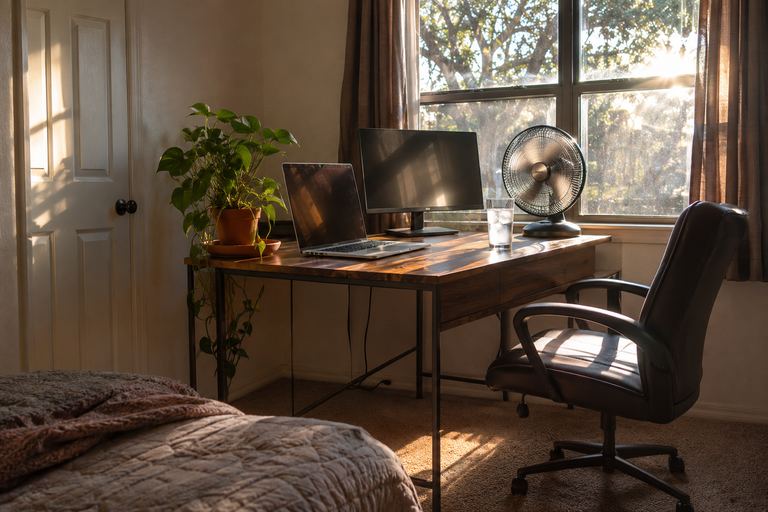
When one room is hotter or colder than the rest of the house, the cause is usually one of three things: not enough conditioned air reaching the room, thin or missing insulation above or around it, or extra heat from sun and outside walls. Check the vent, the filter and the door first. If those are fine, the attic above that room is the next place to look.
Why is one room hotter than the others?
Your thermostat only measures the temperature where it hangs, usually a central hallway. The system shuts off when the hallway is comfortable, whether or not the room at the end of the house has caught up. Anything that makes a room gain heat faster, or receive less air, shows up as a room that is always a few degrees off.
These are the causes we find most often in San Angelo homes, roughly in order:
- Weak airflow. The room is at the end of a long duct run, the duct is kinked, crushed or leaking in the attic, or the register is closed or blocked by furniture.
- No path for air to leave. With the door shut and no return vent, air cannot get out of the room, so new air cannot get in.
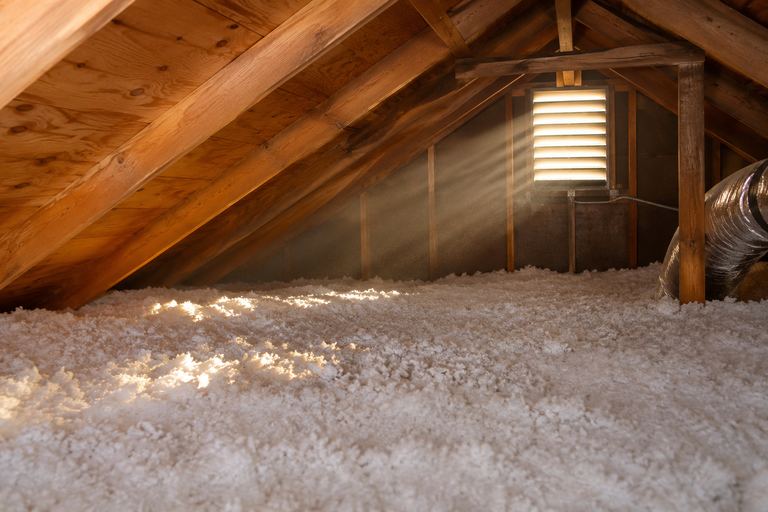
- Thin attic insulation over that room. Insulation gets pushed aside by cable and HVAC work, settles over time, or was never even in the first place. A bare patch the size of a closet door makes a noticeable hot spot.
- Sun exposure. West and south windows take hours of direct afternoon sun, and a room with two outside walls picks up more heat than an interior room.
- What is underneath or beside it. Rooms over a garage, rooms next to an uninsulated attic space and converted porches are regular offenders.
One room not cooling down? Five things to check first
These take a few minutes and cost nothing.
- Open the register fully and make sure a bed, dresser or rug is not covering it.
- Feel the airflow. Compare it with a vent in a room that is comfortable. If it is clearly weaker, the problem is in the duct.
- Change the air filter. A clogged filter cuts airflow to every room, and the farthest rooms suffer first.
- Test with the door open. If the room improves with the door open, it needs a return path: a larger gap under the door, a transfer grille or a return vent.
- Look at the windows at 4 p.m. If the sun is pouring in, close the blinds for a few afternoons and see how much difference it makes.
If the vent is blowing well, the door is open, the blinds are shut and the room is still warmer than the hallway, the heat is coming in through the ceiling or walls.
Why is my bedroom so hot at night?
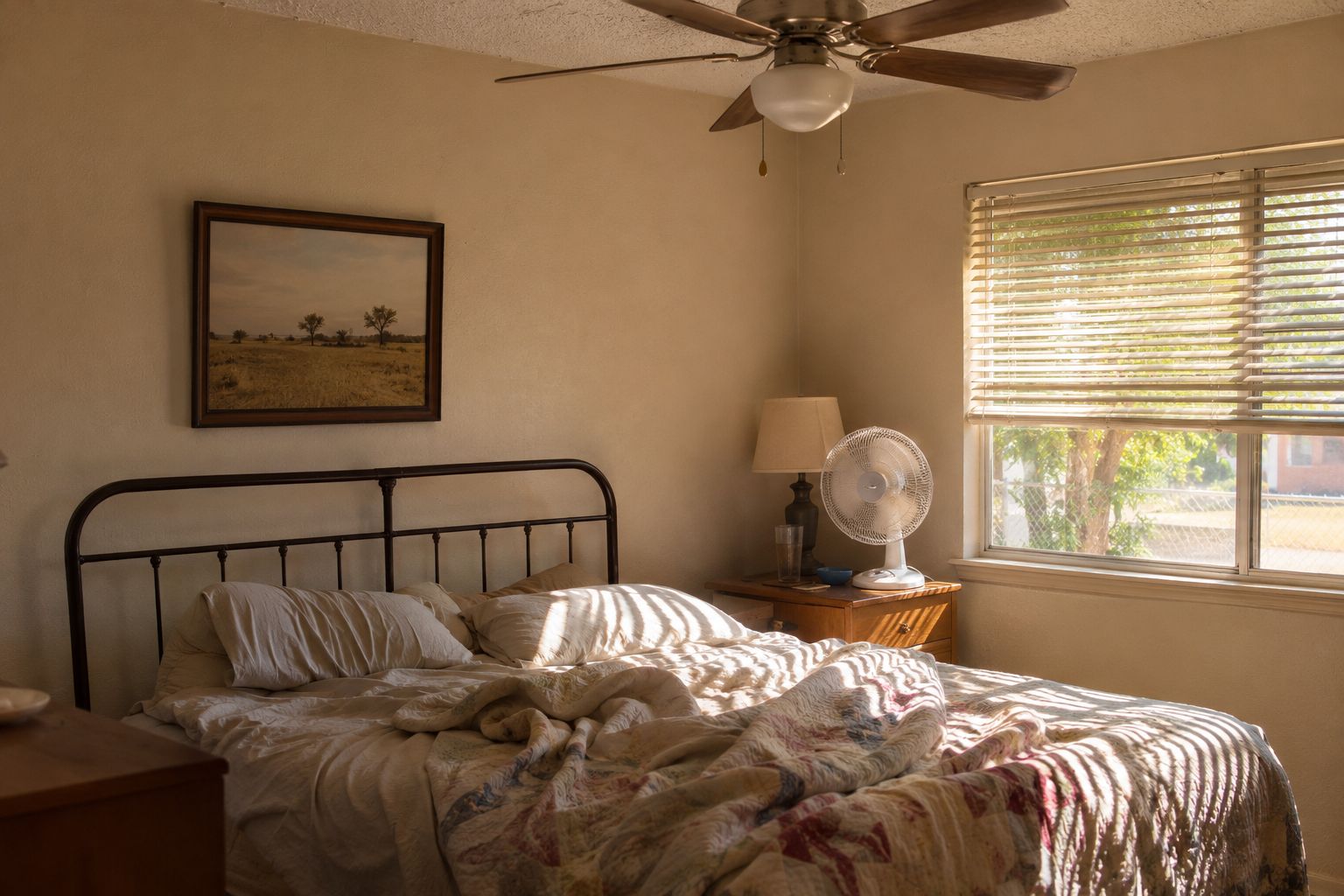
A bedroom that is too hot at night, hours after the sun has gone down, points to stored heat. The attic above it can stay well over 100 degrees late into the evening, and brick and drywall that soaked up sun all afternoon keep releasing it after dark. Closing the door at bedtime then cuts off whatever airflow the room had.
To keep a bedroom cool:
- Keep blinds or curtains closed on sun-facing windows from midday on.
- Run the ceiling fan counterclockwise in summer so it pushes air down.
- Set the thermostat fan to "on" or "circulate" for an hour before bed to mix the air through the house.
- Leave the door cracked, or have the gap under it increased.
- Have the attic insulation above the room checked for depth and gaps.
One room colder than the rest of the house in winter
The same weak spots work in reverse. A bedroom that is always cold usually has more outside wall and window area than the rest of the house, sits over a garage or crawl space, or loses its warm air into the attic through gaps around light fixtures and the tops of the walls.
A room that is not heating up at all is different. If the vent is blowing cool or barely moving air while the rest of the house is warm, a duct has likely come loose in the attic or crawl space and is heating the outdoors instead.
How to fix uneven temperatures in a house
Work from cheapest to most involved:
- Balance the airflow. Many systems have dampers on the duct branches near the air handler. Partly closing the ones feeding rooms that are too cold in summer pushes more air to the far rooms. Do not shut registers completely; that raises pressure in the ducts and can make leaks worse.
- Seal and repair ducts. Leaky or crushed attic ducts are one of the most common reasons a single room underperforms.
- Air seal and insulate the attic. Sealing the gaps in the ceiling and bringing insulation up to an even depth fixes the room and lowers the load on the whole system.
- Insulate the trouble spots. Garage ceilings under bedrooms, kneewalls and empty exterior walls can all be insulated without tearing the house apart.
- Deal with the glass. Solar screens, window film or exterior shade on west windows cut afternoon heat sharply.
- Add dedicated cooling as a last resort. A ductless mini split solves almost any single room, but it treats the symptom. Fix the envelope first and you may not need it.
If you are not sure which of these applies, an insulation assessment will show whether the attic above the room is the weak link.
Frequently asked questions
Is it normal for one room to be hotter than the others?
A difference of two or three degrees between rooms is common. More than that, or a room that never catches up, means something specific is wrong: weak airflow, missing insulation or heavy sun exposure.
Will closing vents in other rooms push more air to the hot room?
Partly closing one or two can help a little, but closing several raises pressure in the ductwork, increases leakage and can strain the blower. Adjusting duct dampers or fixing the weak duct run is the better approach.
Can insulation really fix a single hot room?
Often, yes. If the attic insulation over that room is thin, displaced or missing, the ceiling acts like a radiator on summer afternoons. Restoring an even layer and sealing the air leaks under it is frequently all the room needs.
Why is my bedroom hotter than the living room?
Bedrooms are usually at the ends of the duct system, are kept with the door shut, and often sit on a corner of the house with two outside walls. Living rooms are central, open and close to the thermostat.