An AC that runs all day is either not producing enough cooling (dirty filter or coils, low refrigerant, a failing part) or fighting more heat than it was sized for (thin insulation, air leaks, leaky attic ducts, unshaded windows). Check the filter and outdoor unit first. If the air from the vents is cold but the house still will not hold temperature, the house is the problem.
Is it normal for an air conditioner to never shut off?
Sometimes, yes. Residential systems are sized to hold a comfortable indoor temperature on a typical hot day for the area, not on the hottest day of the year. When San Angelo hits 105 or more, a correctly sized system may run nearly nonstop through the afternoon and still let the house drift up a degree or two. That is the system doing its job at its limit.
It is a problem when:
- The AC runs constantly on ordinary 90-degree days.
- The indoor temperature keeps climbing through the afternoon and does not recover until late at night.
- It used to keep up and now it does not.
- The air from the vents is not noticeably cold.
A two-minute test: is it the AC or the house?
Hold a thermometer in the air at a return grille, then at a supply vent near the air handler, after the system has run for 15 minutes. The supply air should be roughly 15 to 20 degrees cooler than the return air.
- Much less than 15 degrees: the equipment is not cooling properly. Call an HVAC technician.
- A healthy difference, but the house is still hot: the AC is working. The house is gaining heat too fast or the cold air is being lost before it reaches the rooms.
AC constantly running but house not cooling: equipment causes
- Dirty air filter. The most common cause and the cheapest fix.
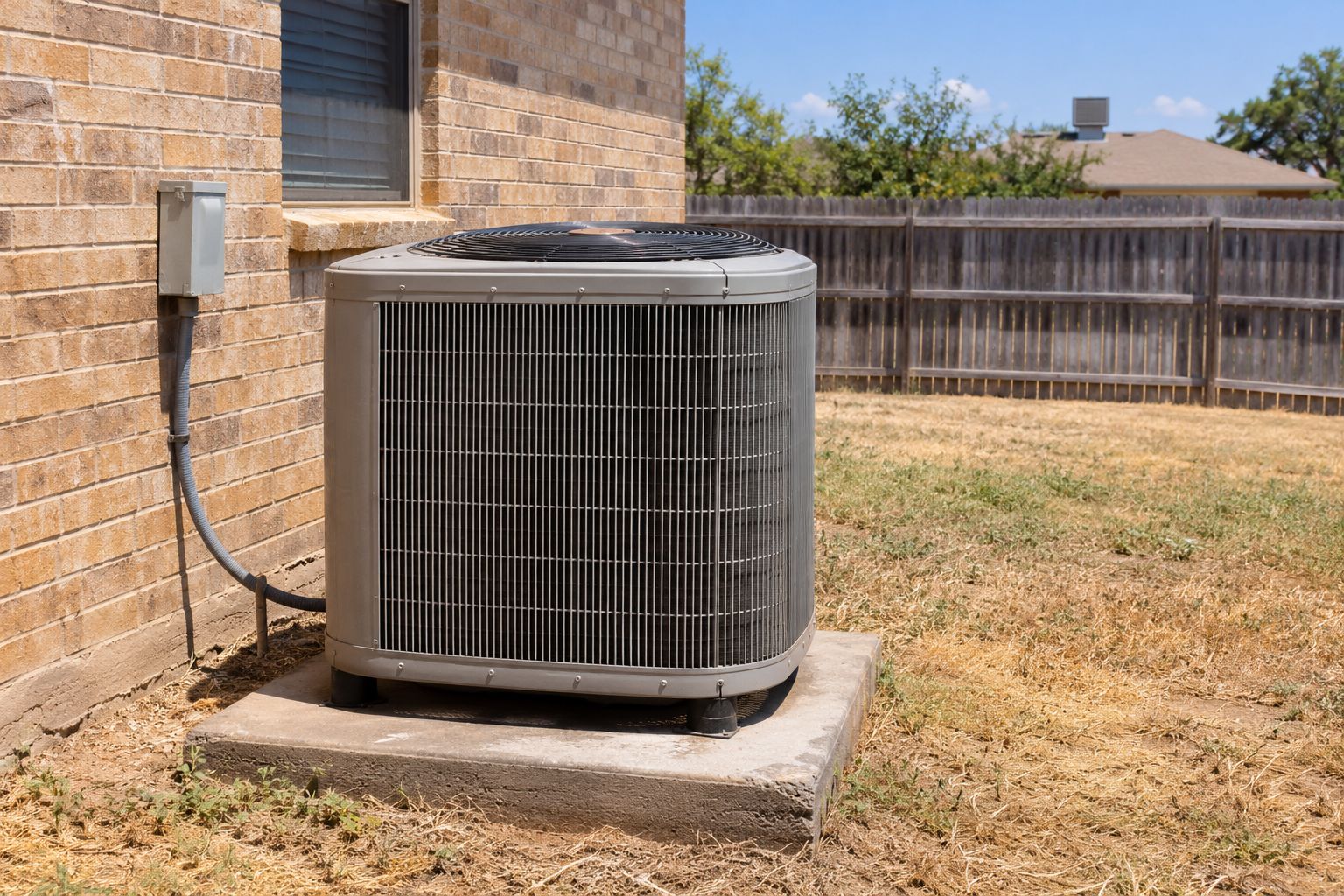
- Dirty outdoor coil. Dust, cottonwood fluff and grass clippings block the fins so the unit cannot shed heat.
- Dirty indoor coil or iced-up coil. Low airflow or low refrigerant can freeze the coil into a block of ice. If you see frost on the lines, turn the system off and call for service.
- Low refrigerant. Refrigerant is not used up; if it is low, there is a leak.
- Failing capacitor, fan motor or compressor.
- An undersized or aging system.
We are not an HVAC company. If the vent air is not cold, a licensed HVAC technician is the right call.
AC running but house still hot: when the house is the problem
If the AC takes forever to cool the house even though the air coming out is cold, look at what it is up against.
- Attic insulation. A thin layer lets attic heat radiate through the ceiling all afternoon. This is the largest single source of heat gain in most single-story West Texas homes.
- Leaky ducts in the attic. Supply leaks blow cooled air into the attic. Return leaks suck 130-degree attic air into the system, which then has to cool it.
- Air leaks. Every gap that lets cooled air out pulls hot outside air in somewhere else.
- Sun on glass. Unshaded west windows can add as much heat as a space heater.
- Indoor heat sources. Ovens, dryers and a garage refrigerator all add load.
This is why a house can get hot even with the AC running: the equipment is fine, but the house is not staying cool because it cannot hold on to what the AC produces.
How to make the AC cool the house faster
- Replace the filter.
- Hose off the outdoor coil and clear a couple of feet around it.
- Close blinds on the sunny side before the afternoon.
- Do not turn the system off during the day and ask it to pull the house down ten degrees at 5 p.m. A smaller setback of three or four degrees recovers much faster.
- Avoid the oven and dryer in the afternoon.
- Make sure every supply register and return grille is open and unblocked.
Setting the thermostat lower does not make the air colder or the system faster. It only makes it run longer.
When the AC cannot keep up with the heat every summer
If your AC struggles every summer, reduce the load before you replace the equipment. Air sealing, attic insulation and duct sealing commonly cut run time enough for the existing system to keep up, and they make any future replacement smaller and cheaper.
Frequently asked questions
How long should an AC run on a hot day?
On a mild day, cycles of 15 to 20 minutes a few times an hour are typical. On a 100-degree West Texas afternoon, long or nearly continuous run time is normal. Continuous running on mild days, or running without holding temperature, is not.
Does an AC running all day mean it is too small?
Not necessarily. A properly sized system runs long on the hottest days. It is more often a sign of a dirty filter or coil, a refrigerant leak, or a house that gains heat too quickly because of insulation, duct or air leak problems.
Will adding insulation help my AC keep up?
Yes, if the attic is under-insulated. Less heat coming through the ceiling means fewer hours of run time and a system that can catch up in the afternoon.
Is it bad for an AC to run constantly?
Long steady runs are easier on the equipment than frequent short cycles. The concern is cost and the reason behind it. If it runs constantly and still loses ground, find out why.