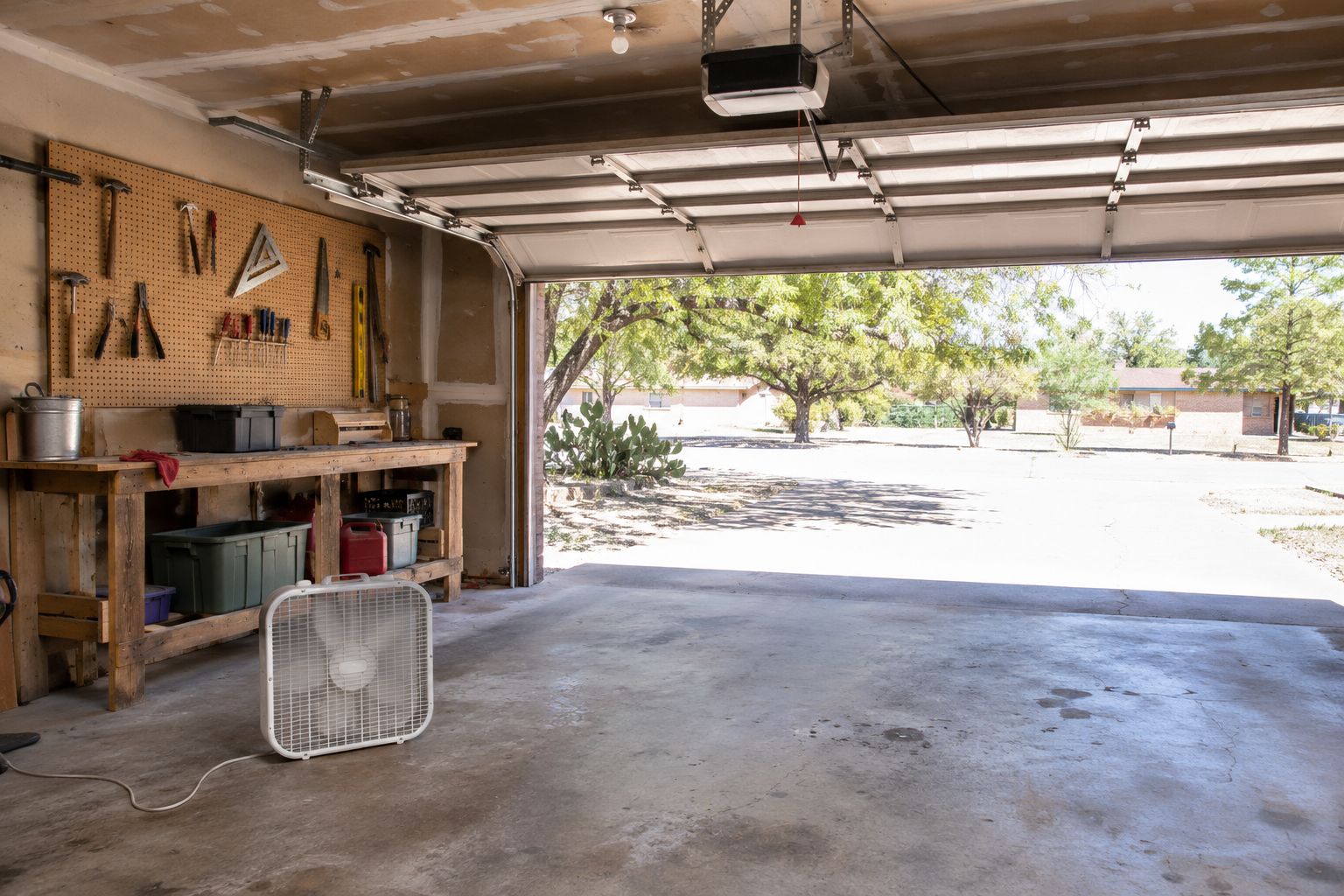
A garage gets extremely hot because it is usually uninsulated on every side, has a large metal door facing the sun, and sits under attic space with nothing on the ceiling. To cool it down, insulate the door, ceiling and walls, seal the gaps, and move the hot air out. Add a mini split only after that if you need real temperature control.
Why is my garage so hot?
Builders treat the garage as outdoor space, so it gets none of the protection the house does.
- The door. A single-layer steel garage door in direct sun gets too hot to touch and radiates into the space like a heater. West-facing doors are the worst.
- The ceiling. There is often no insulation at all above the garage, so the attic's heat comes straight down. If the garage ceiling is too hot to hold your hand against in the afternoon, that is why.
- The walls. Exterior garage walls are commonly bare studs or uninsulated behind the drywall.
- No air movement. With the door shut, there is nowhere for hot air to go.
- The car. Parking a vehicle that has just been driven adds a large block of hot metal that takes hours to cool.
- The slab. Concrete soaks up heat all day and gives it back all evening.
How to cool a garage without AC
Start with the things that are free or nearly free.
- Ventilate in the morning and evening. Open the big door a foot or two and a window or side door on the opposite wall, and set a fan to push air out. Do this when the outside air is cooler than the garage, not at 3 p.m.
- Let the car cool off outside for half an hour before pulling it in.
- Shade the door and windows. An awning, shade sail or a tree on the west side helps more than anything you do inside.
- Use a fan where you work. Air moving across you matters more than the room temperature.
- Weatherstrip the door. Replace the bottom seal and the side and top trim seals to keep hot wind and dust out.
- Clear the clutter. Stacked boxes block airflow and hold heat.
An evaporative cooler can also work well in our dry climate, as long as the garage has an opening for the air to leave.
How to keep a garage cool for good: insulation
If the garage gets extremely hot every afternoon, ventilation alone will not fix it. You have to stop the heat getting in.
The garage door
Insulation kits made of rigid foam or reflective panels fit inside the door sections. A factory-insulated door is better still. Either way, this is usually the most noticeable single change.
The ceiling
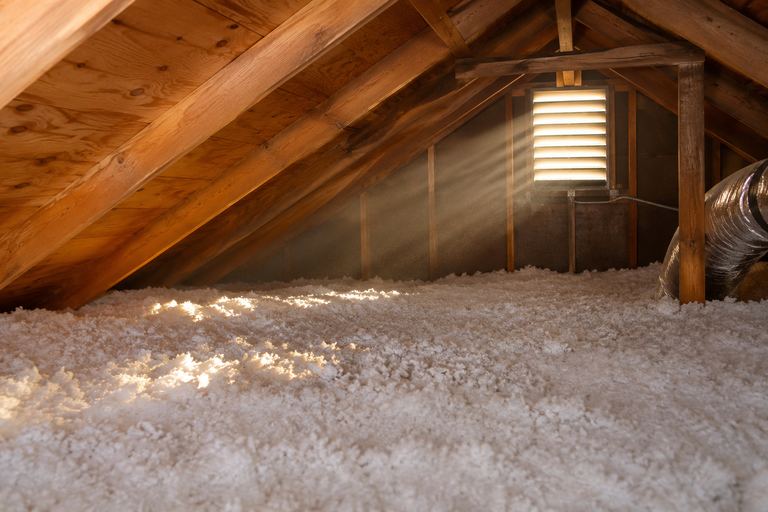
If there is attic space above, blown-in insulation or batts go in the same way they would over the house. If the garage ceiling is open rafters, it needs to be insulated and covered. A room over the garage benefits too, since its floor is the garage ceiling.
The walls
Open stud walls take fiberglass batts and then drywall. Walls that are already finished can be filled with blown-in insulation through small holes. Do not leave insulation exposed in a garage; cover it with drywall.
A radiant barrier
Reflective foil under the roof deck cuts the radiant heat reaching the ceiling and works well alongside insulation in hot, sunny climates like ours.
See our fiberglass insulation and insulation offer pages for how we handle garages.
Garage temperature control: when to add cooling or heating
Once the garage is insulated and sealed, a small ductless mini split can hold it at a steady temperature year-round for a reasonable cost. Putting one in an uninsulated garage is like air conditioning a tent.
Do not cut a vent from the house's central system into the garage. It unbalances the system, and building codes prohibit openings that could let vehicle exhaust and fumes back into the living space.
How to keep a garage warm in winter
Everything above works in reverse. An insulated door, ceiling and walls, plus tight weatherstripping, will keep a garage well above the outside temperature on its own, which is often enough to protect stored items and make a short job bearable.
For working heat, use an electric heater or a mini split with a heating mode.
Safety note: never run a car, generator, grill or unvented fuel-burning heater in a closed garage. Carbon monoxide builds up quickly and has no smell.
How to make a garage more comfortable overall
- Insulate the door, ceiling and walls, then cover the walls with drywall.
- Seal the gap between the garage and the house wall, and weatherstrip the door into the house.
- Paint walls and ceiling a light color to brighten the space.
- Add a ceiling or wall-mounted fan.
- Coat or cover the slab to cut dust.
Frequently asked questions
Is it worth insulating a garage in Texas?
If you work, exercise or store temperature-sensitive things in it, yes. It also helps the house: an attached garage shares a wall, and sometimes a ceiling, with living space, so a cooler garage means less heat pushing into those rooms.
Does insulating the garage door make a difference?
It is usually the biggest single improvement, especially on a west- or south-facing door. It also makes the door quieter. Check that the opener and springs can handle the small amount of added weight.
Why is the garage ceiling so hot?
There is usually attic space directly above it with no insulation on the garage ceiling. The attic heats up under the roof and radiates down. Insulating that ceiling fixes it.
Can I leave the garage door cracked to keep it cool?
A gap of a few inches helps hot air escape, particularly with a fan and a second opening for cross ventilation. Weigh it against security and pests, and close it during the hottest part of the day when outside air is hotter than the garage.