A house that will not stay warm is losing heat in two ways: warm air leaking out through the top of the house and heat passing through under-insulated ceilings, walls and floors. If the heater is running but the house is still cold, first confirm the system is putting out warm air. If it is, air sealing and insulation are what will make the house hold its heat.
Why is my house so cold?
West Texas homes are built with summer in mind, and winter exposes every shortcut. A cold snap with a north wind finds the gaps quickly.
- Heat rises and leaves. Warm air collects at the ceiling and escapes into the attic through light fixtures, the attic hatch, and the open tops of interior walls.
- Cold air replaces it. Outside air is drawn in low, around doors, outlets and floors, which is the draft you feel at your feet.
- Thin attic insulation. What does not leak out as air conducts out through the ceiling.
- Empty walls. Many older homes have little or no insulation in the exterior walls.
- Leaky ducts. In an attic or crawl space, duct leaks send heated air outdoors before it reaches a room.
- Single-pane windows.
Heater running but house still cold
Check the equipment first, because it is the quickest thing to rule out.
- Filter. A clogged filter can make a furnace overheat and shut its burners off while the fan keeps running, so it blows lukewarm air.
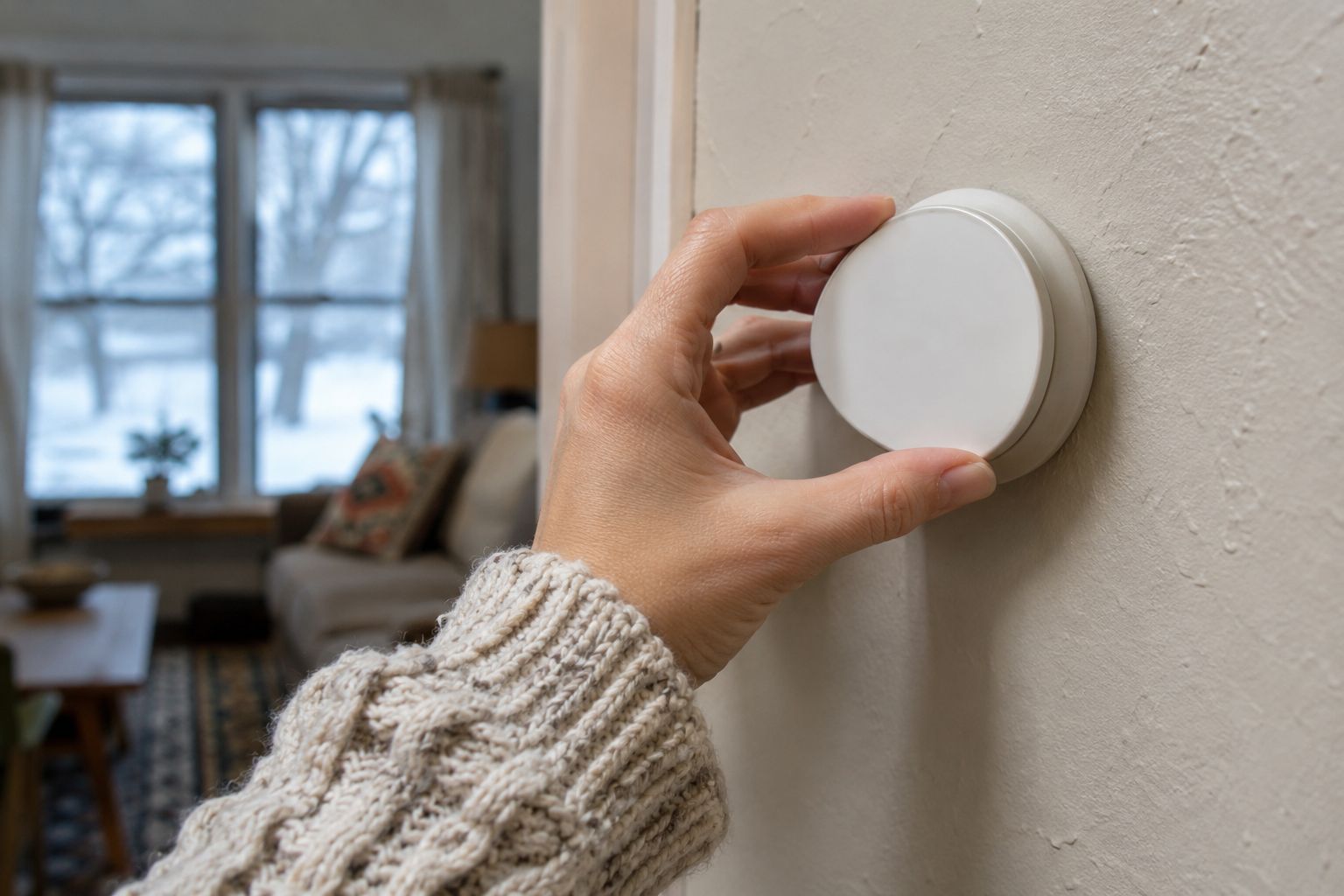
- Thermostat. Make sure it is set to "heat" and the fan is on "auto". On "on", the fan blows unheated air between cycles and the vents feel cool.
- Vent temperature. Air from a gas furnace should feel distinctly hot. Air from a heat pump is only warm, often around 90 to 100 degrees, and can feel cool on your skin even when it is working correctly.
- Heat pumps in cold weather. Output drops as the outdoor temperature falls, and the unit periodically goes into a defrost cycle. That is normal. Constant reliance on auxiliary heat is not.
- Disconnected duct. If one area gets nothing, a duct may have come apart.
If the air is not warm, call an HVAC technician. If it is warm and the house still will not hold temperature, keep reading.
Why does my house lose heat so fast?
If the house gets cold almost immediately after the heat turns off, it has very little resistance to heat loss. Two measurements matter: how leaky the house is and how much insulation it has.
A leaky, lightly insulated house behaves like a bucket with holes in it. You can keep it full only by pouring constantly, and the level drops the moment you stop. A tight, well-insulated house holds its temperature for hours.
The speed of the drop is the giveaway. Feeling the chill within ten or fifteen minutes of the furnace shutting off points to air leakage, since moving air carries heat away much faster than conduction through a wall does.
Cold walls inside the house
Put your hand on an exterior wall on a cold morning, then on an interior wall. If the outside wall is noticeably colder, there is little or nothing in it. Homes built before insulation was required often have empty wall cavities, and batts in later homes may have slumped or been left out around windows and corners.
Cold walls make a room feel colder than the thermostat says, because your body loses heat to cold surfaces around it. They can also collect condensation behind furniture and in closets, which leads to musty smells and mildew.
Closed walls can be insulated without removing the drywall. Blown-in insulation is installed through small holes drilled between the studs, and the holes are patched and textured to match.
Why are my bedrooms so cold?
Bedrooms sit on the corners of the house, so they have two outside walls and at least one window. They are at the end of the duct runs, often on the north side, and the doors are closed at night, which cuts off the return air. Rooms over a garage or at the end of a pier-and-beam wing lose heat through the floor as well.
Opening the door, making sure the vent is clear, and sealing the window trim will help tonight. Insulating the attic above and the walls around those rooms is what fixes it.
How to make a house retain heat
To stop heat escaping the house, seal first and insulate second.
- Air seal the ceiling. Close the gaps into the attic at wiring and plumbing holes, fixture boxes, wall top plates and the hatch.
- Insulate the attic to a full, even depth.
- Weatherstrip and caulk doors, windows and trim.
- Insulate exterior walls that are empty.
- Insulate floors over crawl spaces and garages.
- Seal ductwork.
- Upgrade windows where they are single pane or the frames have failed.
How to keep the house warmer this winter without a project
- Open curtains on the south side during the day and close all of them at dusk.
- Reverse ceiling fans to clockwise on low to push warm air down from the ceiling.
- Close the fireplace damper when there is no fire.
- Keep interior doors open so heat can circulate.
- Lay rugs on bare floors.
- Do not block supply vents or return grilles with furniture.
See our insulation services for attic, wall and floor options, or read how to find and stop drafts.
Frequently asked questions
Why is my house cold when the thermostat says 70?
Air temperature is only part of comfort. Drafts and cold wall, window and floor surfaces pull heat from your body, so 70 degrees in a leaky, poorly insulated house feels much colder than 70 degrees in a tight one.
Does attic insulation help in winter as much as summer?
Yes. Heat moves toward cold, so in winter it moves up and out through the ceiling. Attic insulation and air sealing slow that loss the same way they slow heat coming in during summer.
Can you add insulation to existing walls?
Yes. Blown-in insulation can be installed into closed wall cavities through small holes that are patched afterward, with no need to remove the drywall.
Should I close vents in rooms I do not use?
Generally no. Closing several vents raises pressure in the ducts and increases leakage, and unheated rooms make the adjoining rooms colder. Closing one or two partway is fine.