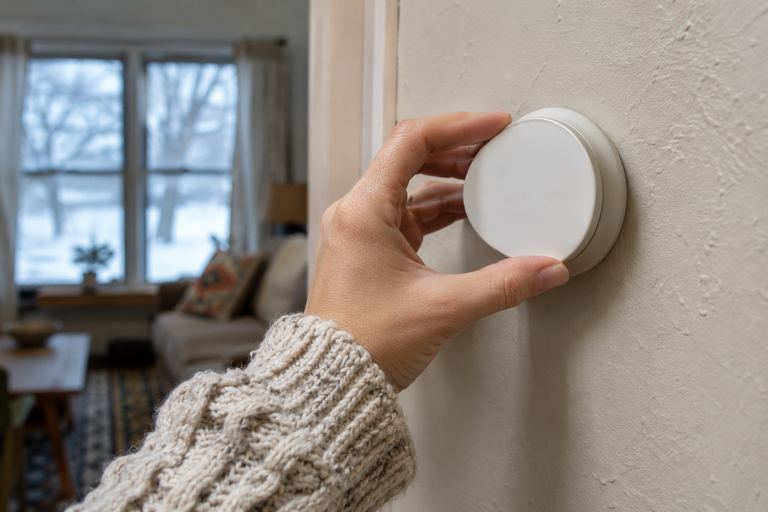

A drafty house has two sets of leaks working together. Warm air escapes through gaps high in the house (the attic hatch, light fixtures, the tops of walls), and that pulls cold outside air in through gaps low in the house (outlets, baseboards, doors, floors). Sealing the high leaks in the attic usually does more than chasing the low ones you can feel.
Why is my house so drafty?
Warm air is lighter than cold air, so in winter it rises and pushes out through any opening at the top of the house. That creates a slight suction lower down, and cold air gets pulled in through every crack it can find. Builders call it the stack effect. Wind adds to it, and so does a leaky duct system.
The result is a house that feels cold with the heat on. The furnace is working, but the air it warms is leaving through the ceiling and being replaced with outside air at ankle height.
Older San Angelo homes are especially prone to it. Many were built with no air barrier at all, with pier-and-beam floors open to a vented crawl space, and with decades of holes added since for wiring, plumbing and can lights.
How to find where the drafts are coming from
Pick a cold, windy day. Turn on the bathroom fans and the kitchen range hood to pull a little extra air through the leaks, then walk the house with the back of a damp hand or a lit stick of incense. Watch the smoke at:
- Electrical outlets and switches on outside walls
- The gap between baseboard and floor
- Window and door frames, and the meeting rails of windows
- The attic hatch or pull-down stairs
- Recessed lights and ceiling fan boxes
- Plumbing under sinks and behind the washer
- The fireplace
Anywhere the smoke bends or streams sideways is a leak.
Cold air coming from outlets and through walls
Feeling cold air coming from an outlet does not mean the outlet is the hole to the outdoors. It means the wall cavity behind it is full of moving outside air, and the outlet box is simply the easiest place for it to get into the room. The air usually enters the wall from the attic above or the crawl space below, through the gaps where wires and pipes pass through the framing.
That is also why you get cold air coming through walls with no obvious crack, and cold spots that follow a single wall. Foam gaskets behind the cover plates help with the symptom. Sealing the top of the wall from the attic, and insulating empty wall cavities, fixes the cause.
Why are my floors so cold?
- Pier-and-beam homes: the floor is a thin layer of wood over a ventilated crawl space. Without insulation and air sealing underneath, cold air washes across the underside and leaks up at every plumbing hole and along the baseboards.
- Slab homes: the edges of the slab are exposed to outside air, so floors are coldest near outside walls. Cold air pooling at floor level from drafts makes it feel worse.
- Rooms over a garage: the floor is only as warm as the garage ceiling insulation allows.
Insulating the floor from below and sealing the penetrations makes a big difference in pier-and-beam houses. In slab homes, stopping the drafts and insulating the walls and attic does most of the work, and rugs handle the rest.
Draft coming from the ceiling
A draft from above usually comes from one of four places: the attic hatch or pull-down stairs, recessed light fixtures, a bathroom exhaust fan with a stuck damper, or supply vents when the system is off and cold attic air sinks through leaky ductwork.
An unsealed, uninsulated attic hatch is a hole in the ceiling as big as a window. Weatherstripping the frame and adding an insulated cover is one of the cheapest worthwhile jobs in any house.
How to stop drafts in a house
Start with the do-it-yourself fixes for drafty rooms:
- Weatherstrip exterior doors and add door sweeps. If you can see daylight, you are heating the yard.
- Caulk around window and door trim, inside and out.
- Add foam gaskets behind outlet and switch plates on outside walls.
- Seal plumbing holes under sinks with caulk or canned foam.
- Weatherstrip and insulate the attic hatch.
- Close the fireplace damper when it is not in use.
Then the work that keeps cold air out of the house for good:
- Attic air sealing. Sealing the tops of walls, wiring and plumbing holes, and fixture boxes from above, before adding insulation. This shuts off the exit that drives the whole draft cycle.
- Attic insulation to a full, even depth.
- Wall insulation. Empty wall cavities can be filled with blown-in insulation through small holes that are patched afterward.
- Floor insulation under pier-and-beam homes.
- Duct sealing.
- Window and door replacement where frames are warped or glass is single pane.
We do the insulation and air sealing, the drywall patching that goes with it, and window and door replacement.
Frequently asked questions
Why does my house feel cold even with the heat on?
Drafts make you feel colder than the thermostat reading, and warm air leaking out through the ceiling means the furnace is constantly reheating new outside air. Cold wall, window and floor surfaces also pull heat from your body. Air sealing and insulation address all three.
Do foam outlet gaskets stop drafts?
They reduce the draft you feel at that outlet. They do not stop the air moving inside the wall. Sealing where the wall opens into the attic or crawl space is what removes the source.
Is a drafty house bad for my energy bill?
Yes. Air leakage is one of the largest sources of heating and cooling loss in older homes. Every cubic foot of air that leaks out has to be replaced with outside air that you then pay to heat or cool.
Can a house be sealed too tightly?
A home needs fresh air, but it should come from controlled ventilation like bath and kitchen fans, not random cracks. Most existing homes are nowhere near too tight. Homes with gas appliances should have them checked for proper venting after major air sealing.