If you have rats or mice in the attic, deal with it in this order: get the rodents out and seal how they got in, clean up droppings and nesting safely without sweeping or dry vacuuming, then remove insulation that is soiled or flattened and replace it. Light, isolated activity can be spot cleaned. Widespread droppings, a urine smell or trampled insulation means it needs to come out.
Signs of rats or mice in the attic
- Scratching noises in the attic at night, usually soon after dark and again before dawn. Light, quick scurrying suggests mice; heavier thumping or gnawing suggests rats.
- Rodent droppings. Mouse droppings are about the size of a grain of rice. Rat droppings are larger, around half an inch.
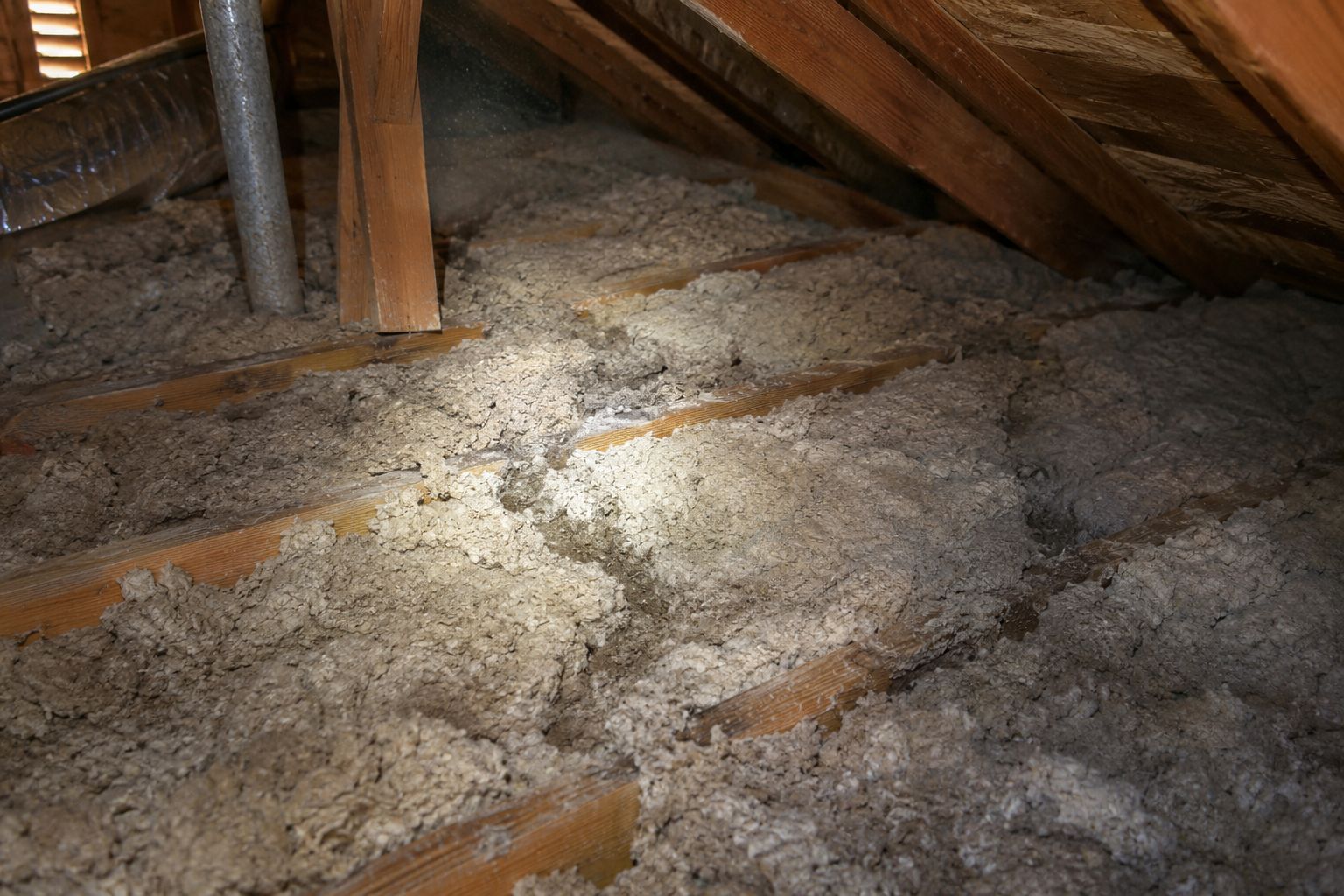
- Trails and tunnels pressed into the insulation, often running along the eaves or beside ducts and pipes.
- Nests of shredded insulation, paper or duct wrap.
- Gnaw marks on wood, wiring, PVC pipe and flex duct.
- Greasy rub marks along rafters and at entry holes.
- Smell. An attic that smells like urine or ammonia, or a musty odor coming from the vents or the attic hatch.
What rodent damage in the attic actually does
Insulation is ideal nesting material: warm, soft and hidden. The damage goes beyond the mess.
- Lost insulating value. Insulation works by trapping still air. Tunnels, trampled runs and urine-soaked clumps are compressed and no longer do the job, so the rooms below get hotter and the AC runs longer.
- Contamination. Droppings and urine build up in the insulation and can be drawn into the house through ceiling gaps and leaky return ducts.
- Chewed ducts. Holes in flex duct leak cooled air into the attic and pull attic air into the system.
- Chewed wiring. Rodents gnaw constantly. Exposed conductors are a fire hazard and should be inspected by an electrician.
- Odor that keeps attracting more rodents even after the first group is gone.
How to get rid of rats in the attic
Cleaning up before the rodents are gone and the entry points are closed is wasted effort. Do this first:
- Find how they are getting in. Look for gaps where the roof meets the fascia, at soffit vents, around plumbing stacks and AC line penetrations, at gable vents, and where utility lines enter. A mouse needs a hole about the width of a pencil; a rat needs one about the size of a quarter.
- Trap. Snap traps along the runways are the standard approach. Avoid poison in an attic: the animals die in walls and insulation where you cannot reach them.
- Seal the entry points with steel mesh, sheet metal or mortar. Foam alone will be chewed through.
- Remove what attracts them: tree limbs touching the roof, pet food stored in the garage, open trash.
- Confirm they are gone. No new droppings and no noise for a week or two.
For anything beyond a couple of mice, a licensed pest control company is worth the money. We do not do pest control; we come in after it.
How to clean an attic after rats or mice
Rodent droppings and urine can carry diseases, including hantavirus, and the risk comes from breathing dust stirred up during cleanup. The Centers for Disease Control and Prevention recommends the following for small cleanups:
- Air it out. Open the attic access and any windows for at least 30 minutes before you start, and stay out during that time.
- Wear protection. Rubber or plastic gloves at minimum. In an attic, add a properly fitted respirator, eye protection and coveralls.
- Do not sweep or vacuum dry droppings. That puts contaminated dust in the air.
- Soak first. Spray droppings, urine and nests with a disinfectant or a bleach solution (1.5 cups of household bleach per gallon of water) until wet, and let it sit for five minutes.
- Wipe up with paper towels and put everything in a sealed bag in the outdoor trash.
- Disinfect hard surfaces, then wash gloved hands before removing the gloves, and wash your hands again afterward.
Heavy infestations are not a do-it-yourself job. If droppings are spread across the attic, the insulation is soaked or matted, or there are dead animals, have it handled by professionals with the right respirators and removal equipment.
How to remove contaminated insulation
You cannot wash insulation. Once it is soiled, the only fix is to take it out.
- Loose-fill insulation is removed with a high-powered vacuum that carries it through a hose to sealed bags outside the house, so nothing travels through the living space.
- Batts are rolled, bagged in the attic and carried out sealed.
- The attic floor is then cleaned and disinfected, and droppings left on the drywall and framing are removed.
- Gaps are sealed. With the attic floor bare, it is the best possible time to air seal the tops of walls, wiring holes and fixture boxes, and to close off any remaining rodent entry points.
- New insulation goes in at a full, even depth.
Not every attic needs a full removal. If activity was limited to one corner, the affected section can be cut out and replaced. An inspection will tell you which you are dealing with.
Attic cleanup after mice or rats is also the right moment to have chewed ducts repaired and the ducts cleaned. For removal and new insulation, see our insulation services.
Frequently asked questions
Do I have to replace insulation after mice?
Not always. A small area with a few droppings can be cleaned up and spot replaced. If droppings are widespread, the insulation smells of urine, or it is tunneled and flattened, it should be removed and replaced.
Is it safe to go in an attic with rodent droppings?
Avoid disturbing them. Ventilate first, wear gloves and a respirator, and never sweep or dry vacuum. Wet the droppings with disinfectant before wiping them up. For large amounts, leave it to professionals.
Why does my attic smell like urine?
A sharp ammonia smell that is stronger on hot days is typical of rodent urine soaked into insulation. The smell stays, and keeps attracting new rodents, until the contaminated material is removed.
Does homeowners insurance cover rodent damage to insulation?
Many policies exclude damage from rodents and other pests, but coverage varies. Check your policy or ask your agent before assuming either way.
Will new insulation keep rodents out?
No insulation is rodent-proof on its own. Sealing the entry points is what keeps them out. Replacing the soiled insulation removes the scent trails and nesting material that draw them back.