An attic gets extremely hot in summer because the roof absorbs sun all day and radiates it into a closed space. Temperatures of 130 to 150 degrees are common. You reduce attic heat with balanced ventilation (intake at the soffits, exhaust at the ridge) and a radiant barrier, and you keep that heat out of the house with air sealing and insulation on the attic floor. A musty or damp attic is a moisture problem and needs its source found.
Why is my attic so hot?
Dark shingles in full sun can run 50 to 70 degrees hotter than the air. The roof deck underneath heats up and radiates downward onto everything in the attic: framing, ductwork and the top of the insulation. Unless that heat is carried away by moving air, the attic keeps climbing through the afternoon.
Is my attic temperature too high?
A well-ventilated attic typically runs 10 to 20 degrees above the outdoor temperature. On a 100-degree day, that means 110 to 120. A poorly ventilated attic can reach 140 to 150 or more. If it is unbearable to stand in for more than a minute, or the roof decking is too hot to touch, ventilation is falling short.
Very high attic temperatures shorten shingle life, cook the ductwork and the air inside it, and load the ceiling with heat.
Hot air coming from the attic into the house
The attic and the house are supposed to be separated by the ceiling. In practice the ceiling is full of holes, and attic heat gets into the house in three ways:
- Air leaks. The pull-down stairs or hatch, recessed lights, bath fan housings, and the gaps at the tops of walls all let hot attic air drop into the rooms below, especially when the AC or an exhaust fan is running.
- Ductwork. Leaks on the return side pull attic air straight into the system. You notice it as warm, dusty air from the vents when the AC first starts.
- Conduction. Heat soaks through thin insulation and warms the ceiling.
If you feel hot air coming from the attic hatch or around can lights, air sealing is the first job.
How to reduce attic heat
There are two goals: make the attic less hot, and stop what heat remains from reaching the house. The second matters more.
- Air seal the attic floor. Foam and caulk at every wire, pipe and fixture penetration and along the wall top plates.
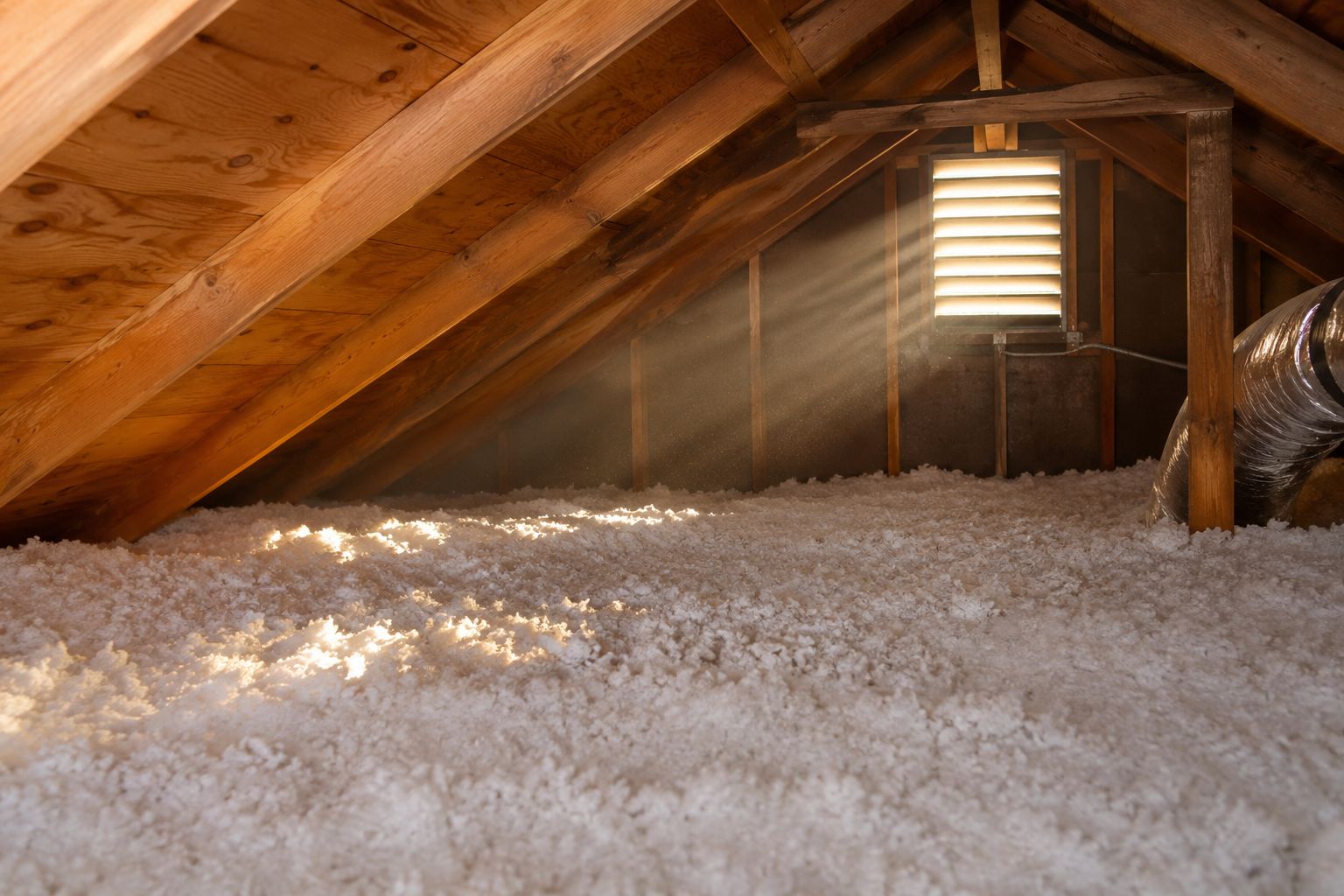
- Insulate to a full, even depth. Roughly R-38 to R-49 for our climate. Keep it out of the soffit vents with baffles.
- Insulate and weatherstrip the attic access.
- Fix the ventilation (next section).
- Add a radiant barrier. Reflective foil stapled under the rafters reflects radiant heat back toward the roof and can lower attic temperatures noticeably in hot, sunny climates.
- Seal and insulate attic ducts.
- Choose a lighter roof when it is time to re-roof.
Another approach is to move the insulation to the roofline with spray foam, which brings the attic and its ductwork inside the conditioned space. It costs more and has to be designed properly, but it suits some homes very well. Our insulation page compares the materials.
How to improve attic ventilation
Attic ventilation works by letting cooler outside air in low and letting hot air out high. It needs both halves.
- Intake: soffit vents under the eaves.
- Exhaust: a ridge vent, roof vents near the peak, or gable vents.
A common rule of thumb is one square foot of net vent area for every 150 square feet of attic floor, split about evenly between intake and exhaust. With balanced high and low vents, many codes allow one per 300.
The usual problems we see:
- Blocked soffit vents. Insulation pushed into the eaves, or vents painted shut, chokes the intake. Baffles hold the insulation back and keep an air channel open.
- Exhaust with no intake. Roof vents or turbines cannot pull air out if none can get in.
- Mixed exhaust types. A ridge vent combined with gable vents or a powered fan can short-circuit, pulling air from the nearest vent instead of from the soffits.
How to cool an attic with a fan: a caution
Powered attic fans do lower attic temperature. If the ceiling below is leaky, they also pull cooled air out of the house and can cost more to run than they save. Seal the ceiling and fix the passive vents first.
Why is my attic damp or musty?
If the attic smells musty, moisture is getting in and not getting out. Common sources:
- Roof leaks at flashing, vent boots, valleys or damaged shingles. Look for dark stains on the decking and rafters.
- Bathroom or dryer exhaust dumped into the attic instead of ducted outdoors. This is very common and puts gallons of water vapor into the space.
- Humid house air leaking up through the ceiling.
- Blocked ventilation that lets moisture linger.
- AC problems: a leaking condensate line or drain pan, or uninsulated ducts that sweat.
- Rodents. A sharp, ammonia-like smell is something else. See rats or mice in the attic.
Condensation in the attic
Condensation forms when warm, moist air meets a cold surface. In winter that is the underside of the roof deck, where you may see water droplets, frost or rusty nail tips on cold mornings. In summer it is cold AC ducts and boots in a humid attic.
The fix is the same either way: stop house air from leaking into the attic, vent every exhaust fan to the outdoors, and keep the attic vents clear.
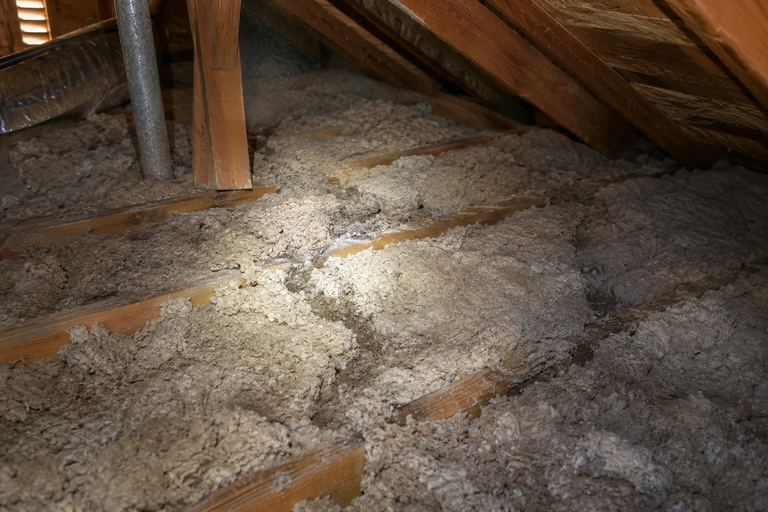
Wet insulation does not insulate, and it stays wet. Once the source is fixed, damp or moldy insulation should be removed and replaced. If a roof leak is behind it, start with a roof inspection.
Frequently asked questions
How hot is too hot for an attic?
Attics commonly reach 130 to 150 degrees on a summer afternoon here. A well-ventilated attic should stay within about 10 to 20 degrees of the outside temperature. Much hotter than that suggests the ventilation is inadequate or blocked.
Does a hot attic make my house hotter?
Yes, if the ceiling is leaky or under-insulated. With good air sealing and a full depth of insulation, a hot attic has far less effect on the rooms below.
Should I add an attic fan or more insulation?
Insulation and air sealing first. They stop attic heat from reaching the house regardless of how hot the attic gets. Improve passive ventilation next. A powered fan is a last step and only makes sense once the ceiling is sealed.
Is a musty attic dangerous?
A musty smell means moisture, and ongoing moisture leads to mold, rotted decking and ruined insulation. Find and fix the source early; it is much cheaper than repairing the damage later.
How do I know if my attic has enough insulation?
Look across the attic floor. If you can see the tops of the ceiling joists, you need more. Insulation should be deep and level, with no bare spots, and should not block the soffit vents.